

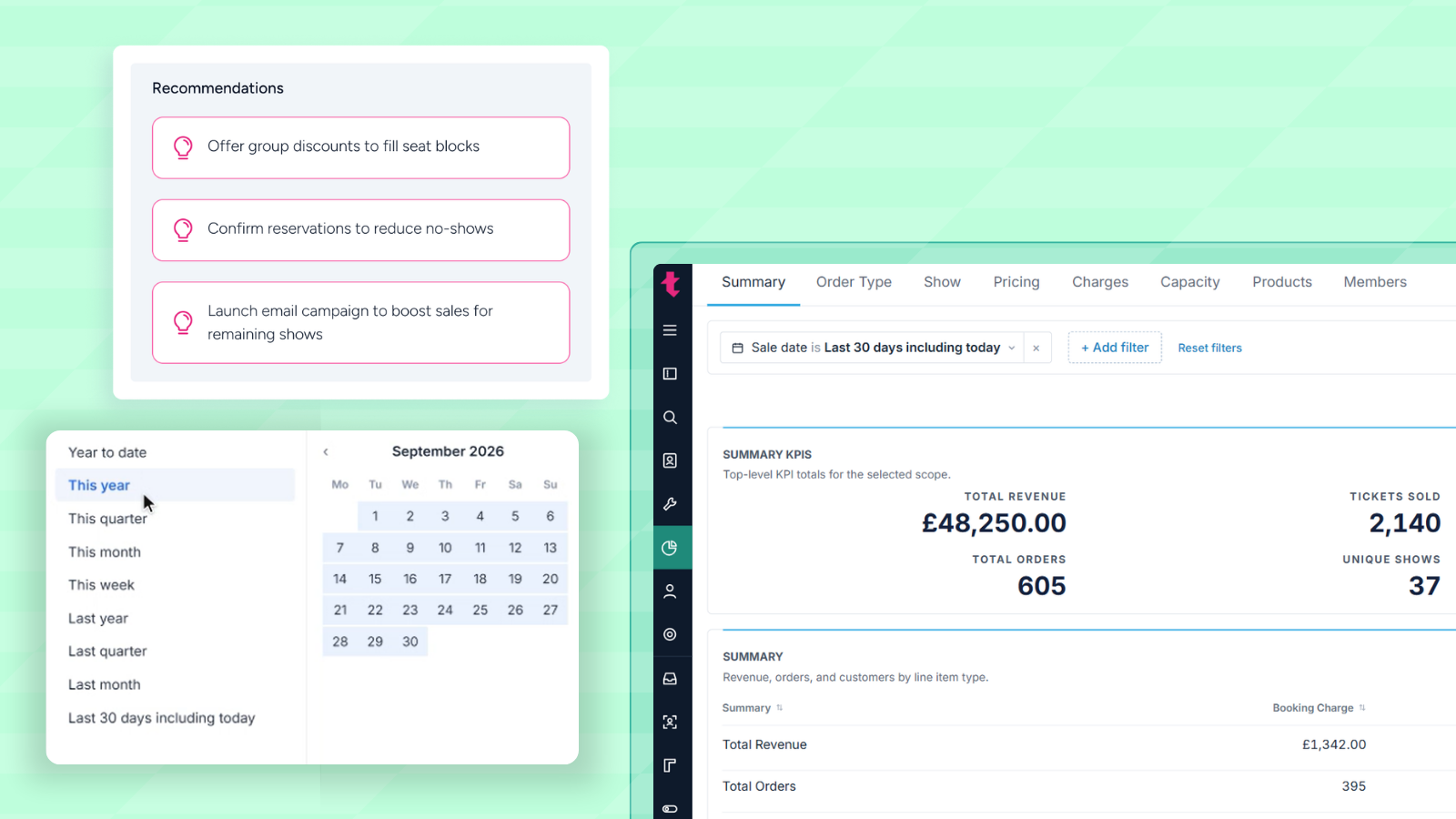
The Department for Science, Innovation and Technology (DSIT) recently published Wave 2 of its Business Data Use and Productivity Study. It’s a broad, cross-sector report, so it doesn’t offer many conclusions specific to the arts, but its key points did make us think, especially about how broader shifts reflect the way we’re re-structuring data and reporting within Ticketsolve.
According to the results of the survey, most businesses are actively seeking to understand their data. Around seven in ten businesses that handle digital data undertake analysis, either in-house or externally - and numbers for the live experience sector match that average. However, fewer businesses are using data to inform their activity. Only 46% of surveyed organisations agreed that data analysis underpins their business decisions, and only 42% said findings from that analysis are readily available to them.
If you work in an arts or cultural organisation, this might sound familiar. You may have a wealth of information at your disposal, but turning that information into practical action can be a challenge.
Data analysis is beneficial to businesses
The DSIT study also makes it clear that for UK businesses as a whole - perhaps unsurprisingly - the real benefit of using data comes from analysis. 51% of businesses that analyse data say it helps them improve their products and services, compared to just 19% of those that only collect it. Similarly, 47% report efficiency or cost savings, compared to 14% of non-analysing businesses.
It’s well known that when it comes to data, the issue for most arts and heritage venues isn't a lack of information. The real issue is having the time and resources to process the numbers at their disposal.
Not every team has an analyst
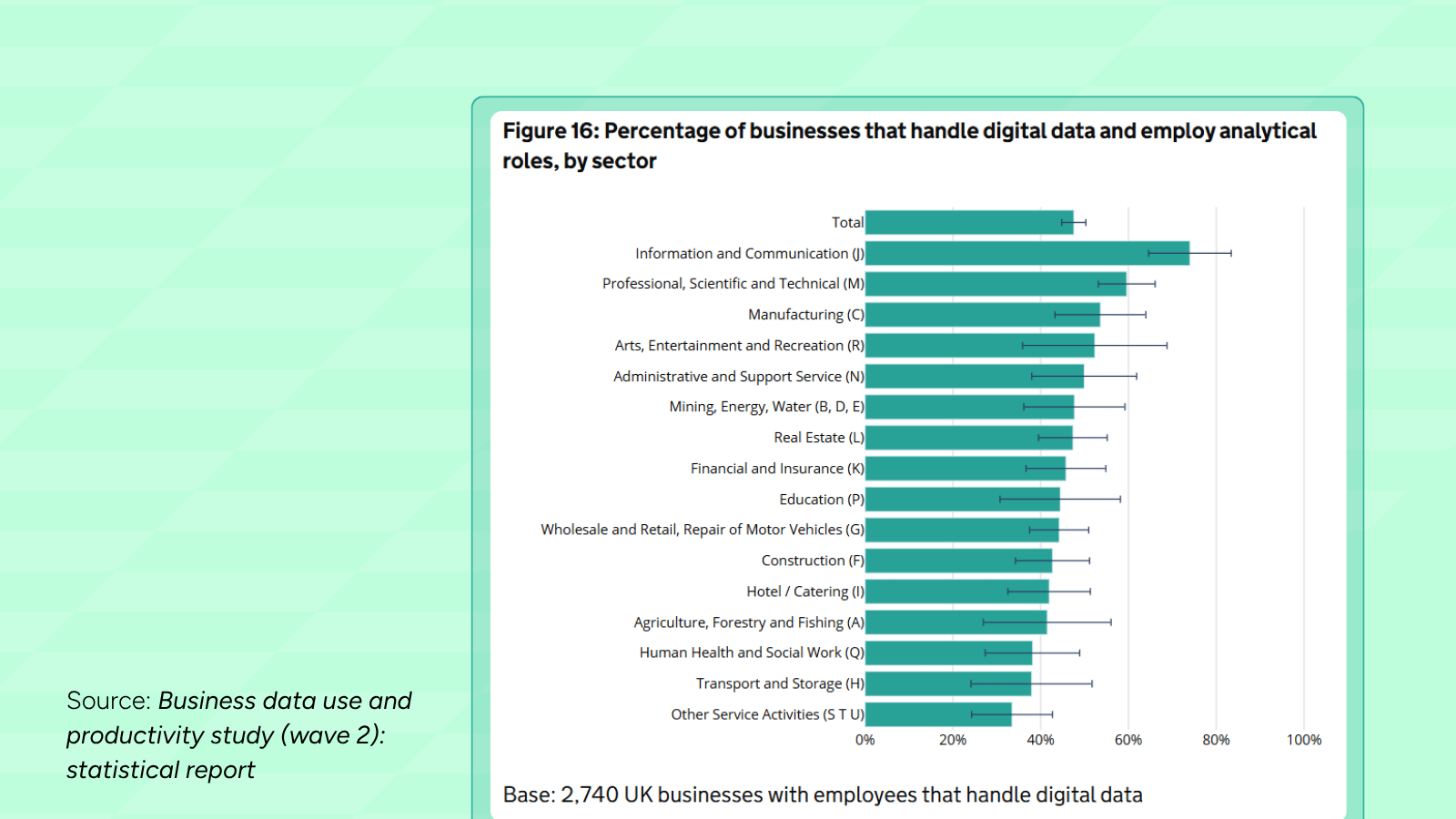
The study also looked at who is doing the analysis. Nearly half (48%) of businesses that handle digital data employ at least one person in an analytical role, but this varies sharply by size: 91% of large businesses do, compared with just 45% of micro businesses (those with fewer than ten employees). On top of that, 70% of businesses reported no investment in staff training over the past year.
For the arts, entertainment and recreation sector, the number of organisations employing someone in an analytical role sits at around half. In other words, roughly half of venues in the sector have a dedicated data analyst on their team. For the other half, this work falls to someone else.
We see this split across our own community, too. Some venues have a dedicated analyst or a data-minded marketer. In many others, data work falls to Box Office and Marketing teams.
That’s why we’re developing Ticketsolve’s handling of data with both kinds of team in mind. For venues without dedicated analytical support, the aim is to put clear, useful insight in front of the people who need it, without the need for specialist skills. For venues that do have an analyst, it’s about spending less time pulling and tidying data and more time acting on it.
What we're building
A while back, we made the call to rebuild our data infrastructure from the ground up using a platform called Snowflake. If you saw our roadmap last year, you'll know we initially looked at building a new dashboard with a third-party tool. But that didn’t provide the quality of experience we wanted to deliver - so we decided to bring everything back in house and rebuild it ourselves.
This means we now have a faster and more capable foundation for data usage within Ticketsolve. We’re also able to use user feedback and act on it quickly, rather than waiting for a third party to make changes or provide workarounds. We want Ticketsolve to be an active partner in your day-to-day work, and this new foundation is key to this. Here's a look at where our roadmap is heading next:
Now: the new Sales Dashboard
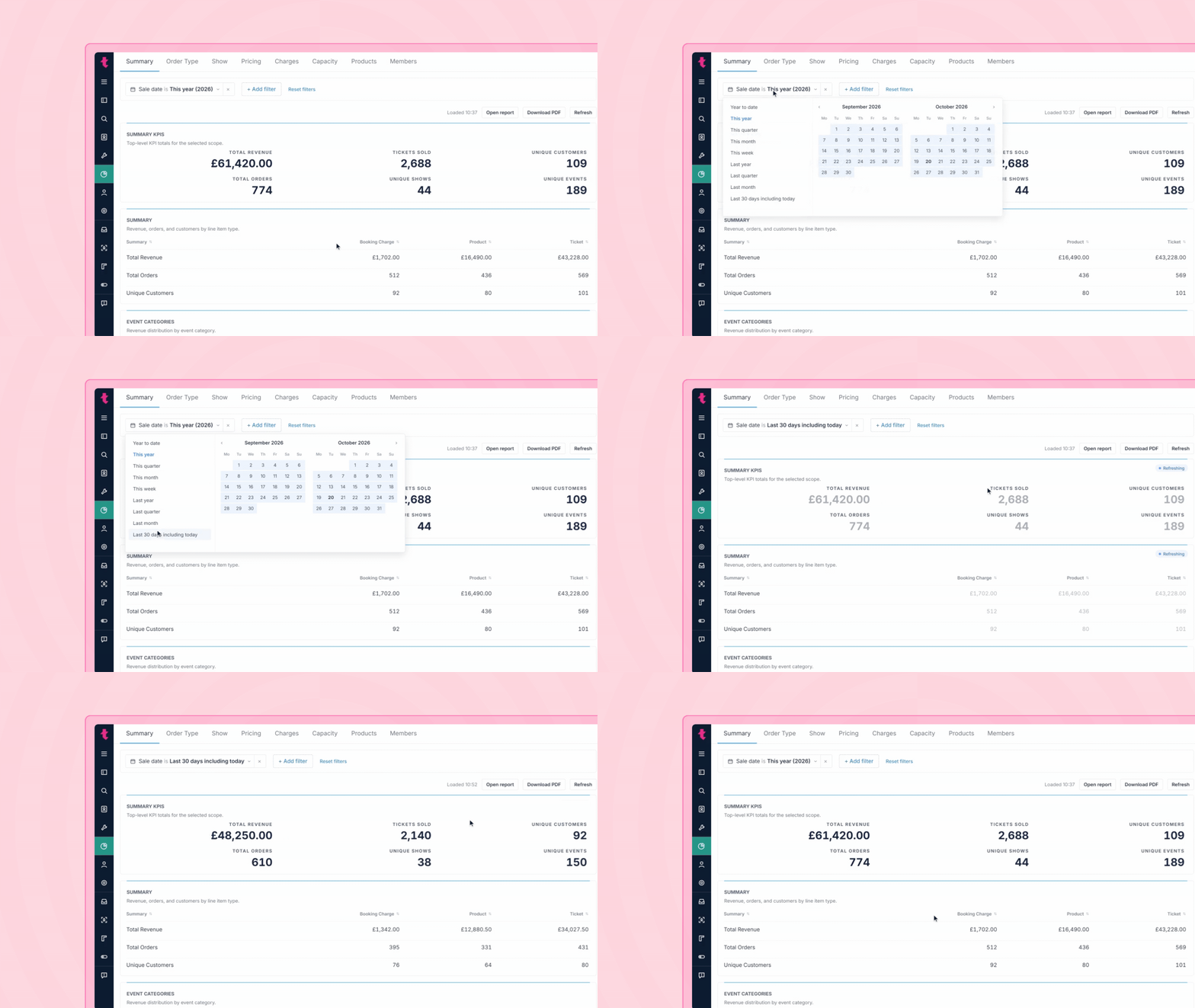
The first piece of this new foundation is our in-house Sales Dashboard, which is currently in testing with Ticketsolve users. Our new dashboard shares richer data and clearer visuals to help you explore your data in more detail, and gives you a broad, top-level overview of the questions you need to stay on top of. Features include:
- Flexible date filters so you can pick from dynamic options or set your own custom range
- Enhanced event filters meaning you can view data for multiple programmes, shows, runs or events at once
- Improved visuals and additional graphs including an event category and revenue sources breakdown
- Additional revenue data, bringing in product sales and booking fee revenue rather than just ticket sales
Next: comparisons, show-level and membership views
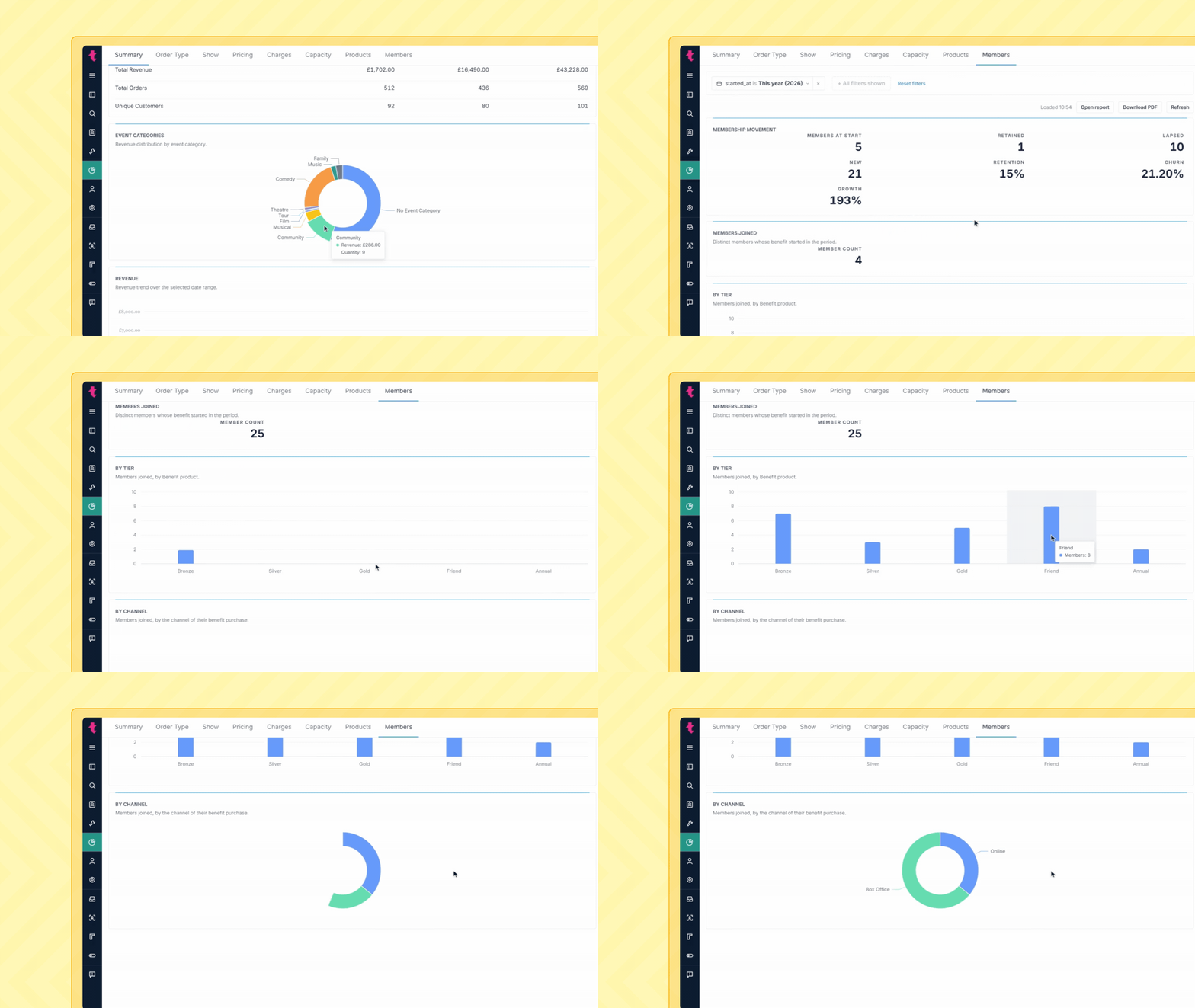
The dashboard is just step one, and the next steps are already well under way. In the coming weeks we’ll be adding more data comparisons, so you can run year-on-year comparisons and compare one show directly against another, all within the dashboard itself.
We’re also taking these insights down to individual show and membership level, starting with memberships. Our new membership view arrives next month and separates the health of your membership base (how many new members you have, how many have lapsed and so on) from the financial side, so you can easily link sales and profitability to the growth of your membership scheme. Shortly after, you’ll be able to see how each show is performing against your targets, how many first-time customers booked for it and a postcode map showing exactly where those audiences are coming from.
Later: role-based insight, forecasting and forward-looking recommendations
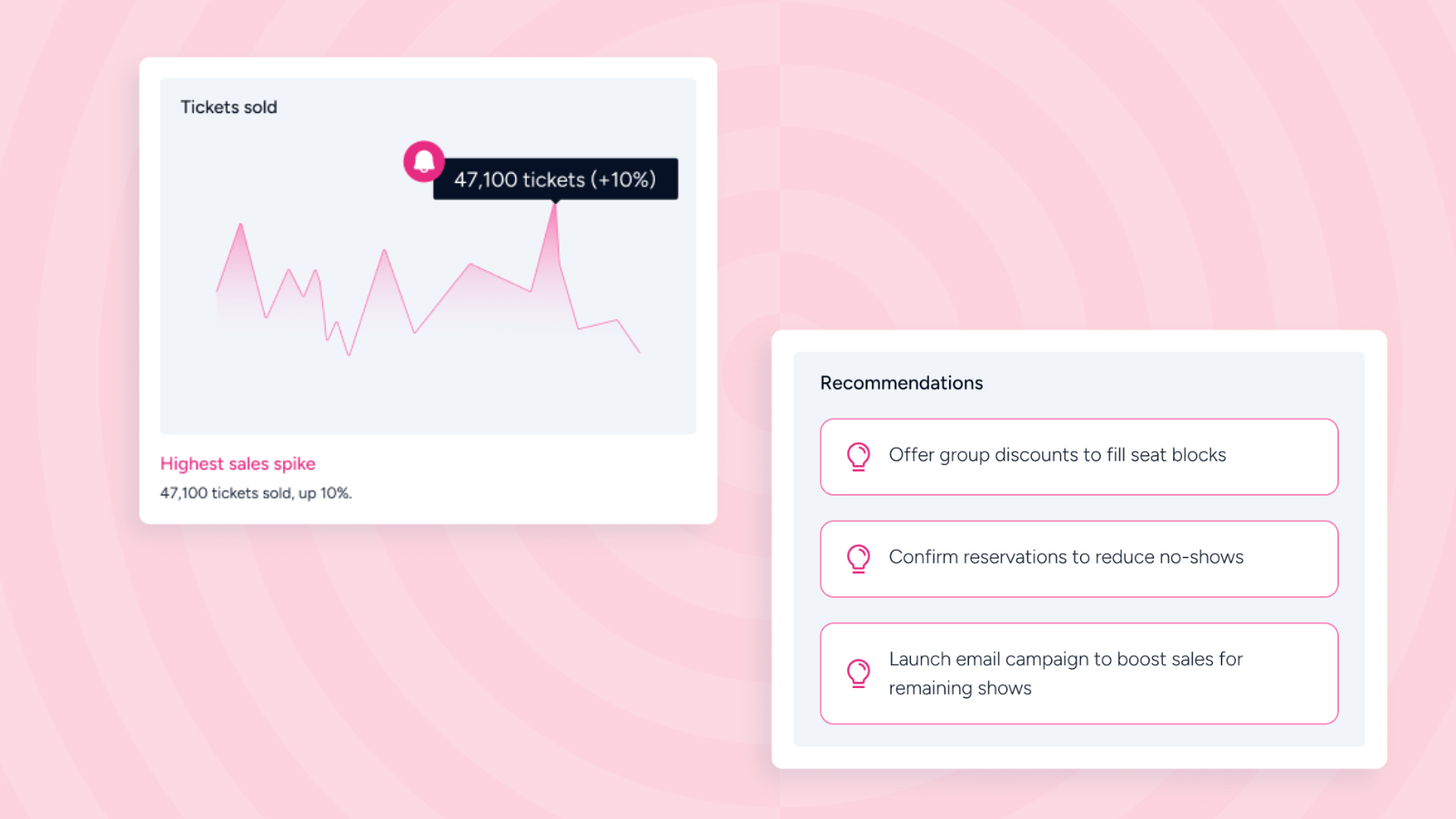
Further out, insights will be much more specific to your role. Numbers that are useful to a marketing manager are very different to those that are useful to Box Office staff, so rather than giving you one generic view, the data will start shaping itself around what actually matters for you. We'll also be surfacing data in more useful places across the system, like putting sales figures directly on a show page, so you’ll be able to find them where you actually need them.
This is also where forecasting and anomaly detection come in. Based on your historical patterns, Ticketsolve will be able to give you a picture of what the next week or two looks like and flag when something falls outside of normal behaviour. If a sales pattern doesn't match what you'd normally expect at this point in a run, you’ll get an alert, and you can decide how to proceed.
Eventually, the system will move from just surfacing insights to proactively pushing recommendations to you. For example, if you’re a director, the system might flag that whilst ticket volumes are up on last year, revenue is down, and then suggest a price point to improve your margins. If you're a marketing manager, the system might notice a dip in sales for a particular event and suggest a campaign targeting the right audience segment that may help.
A responsible approach to AI
With all the talk of new capabilities and agentic features becoming more prevalent across the SaaS sector, we also want to touch on what’s happening with AI. Our position here is to take an incredibly responsible and thoughtful approach.
By building through platforms like Snowflake, we're bringing the models to your data, rather than the other way round. This means we can apply really strict governance to how we deal with AI, ensuring complete GDPR compliance and keeping your customer data entirely secure, while still letting you benefit from the latest technology.
To further understand what we’re building, how it will benefit our users, and our approach to data usage and the use of AI models, hear from Head of Revenue Nick, and Chief Product Officer Chris, as part of our latest Demo Webinar.